
New EU Requirements for AI-Generated Content
Code of Practice Clarifies AI Act Transparency Obligations
The European Commission has published a voluntary Code of Practice for the labeling of AI-generated content. Its purpose is to help organizations prepare for and implement the transparency requirements introduced by the EU AI Act. The Code provides practical guidance on how to identify and disclose AI-generated text, images, audio, and video content, as well as how to make AI-powered interactions more transparent for users. Although participation in the Code is voluntary, its recommendations closely align with the legal obligations that will apply under the AI Act, making it a valuable reference for businesses across all sectors.
Which Content Is Affected
Deepfakes, Chatbots, and Generative AI in Focus
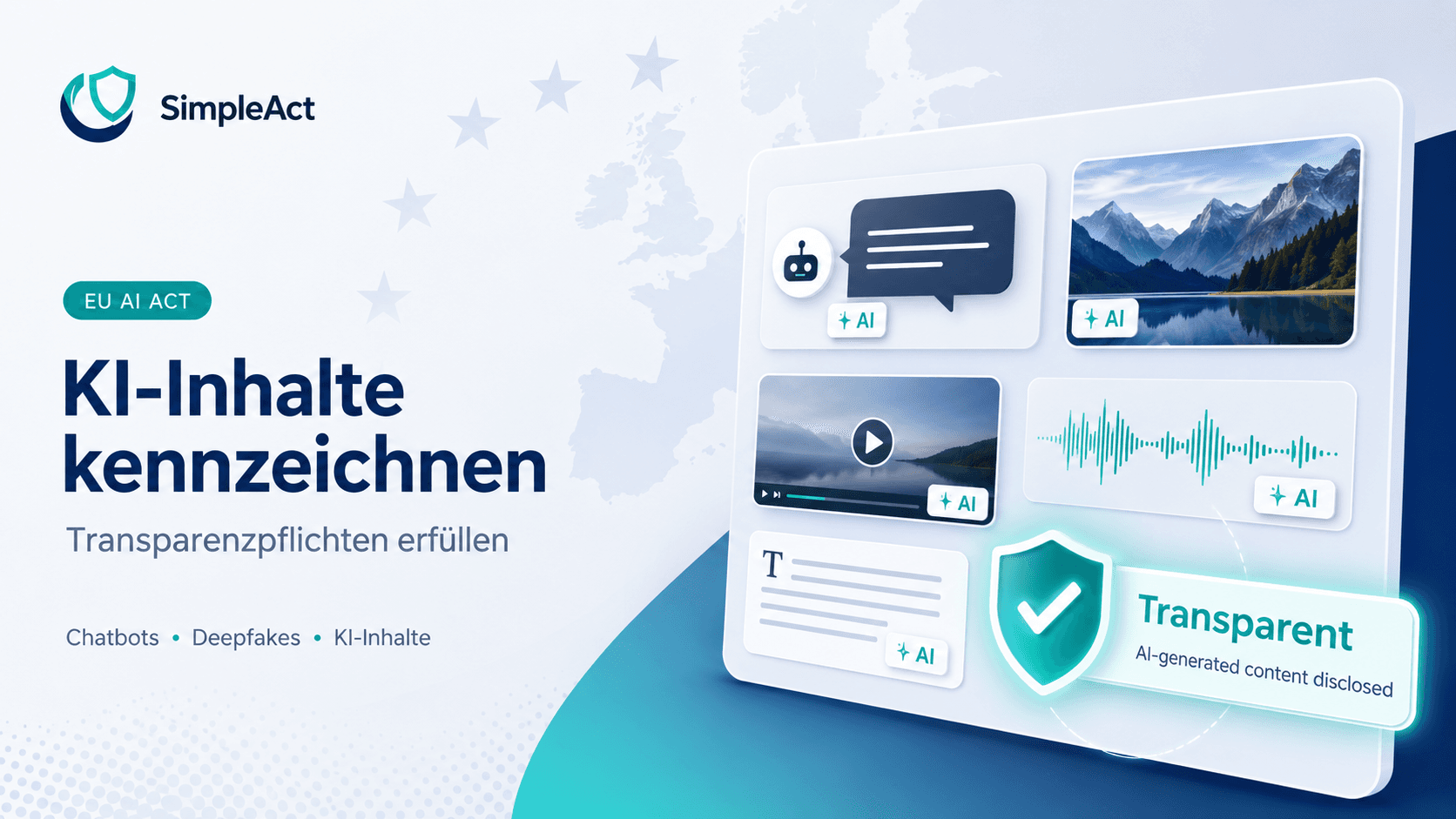
Particularly relevant are the new requirements for providers and operators of generative AI systems. Content that has been fully or partially generated or manipulated by artificial intelligence must be clearly identifiable in the future. This includes:
- Deepfakes
- AI-generated images
- Automatically generated texts
- Interactive systems such as chatbots or virtual assistants
The objective of these transparency obligations is to ensure that users can always recognize when they are interacting with AI or consuming AI-generated content. Organizations should therefore assess early on where appropriate labeling and disclosure mechanisms may be required to comply with upcoming regulatory requirements.
Transparency Becomes Mandatory in August 2026
Organizations Should Prepare Their Processes Today
With additional provisions of the EU AI Act becoming applicable on August 2, 2026, transparency obligations will become mandatory for many organizations. Companies should begin establishing processes that enable them to identify, document, and label AI-generated content in a reliable and consistent manner. This includes both technical measures and clearly defined internal responsibilities. Organizations that prepare early can reduce compliance risks while strengthening trust among customers, partners, and employees.
What SMEs Should Do Now
Early Preparation Creates a Competitive Advantage
Small and medium-sized enterprises are increasingly using generative AI for marketing, customer communication, content creation, and internal operations. The new Code of Practice provides SMEs with practical guidance for implementing future transparency requirements. Recommended actions include conducting an inventory of AI systems currently in use, establishing internal labeling policies, and educating employees about transparency obligations. Taking these steps now can simplify future compliance efforts and reduce regulatory uncertainty.
Why This Matters
Transparency Is Becoming a Core Business Requirement
The rapid adoption of generative AI is transforming how digital content is created and distributed. At the same time, regulators, customers, and business partners increasingly expect organizations to use AI responsibly and transparently. The publication of the Code of Practice signals the direction of European AI regulation: transparency is becoming a fundamental element of trustworthy AI deployment. Organizations that establish clear disclosure practices today will be better positioned to meet future legal requirements and build long-term trust in their AI-driven products and services.
Ready to put EU AI Act compliance on autopilot?
SimpleAct helps you inventory AI systems, classify risk, and generate the required documentation automatically.
Timo
Author · SimpleAct Team