
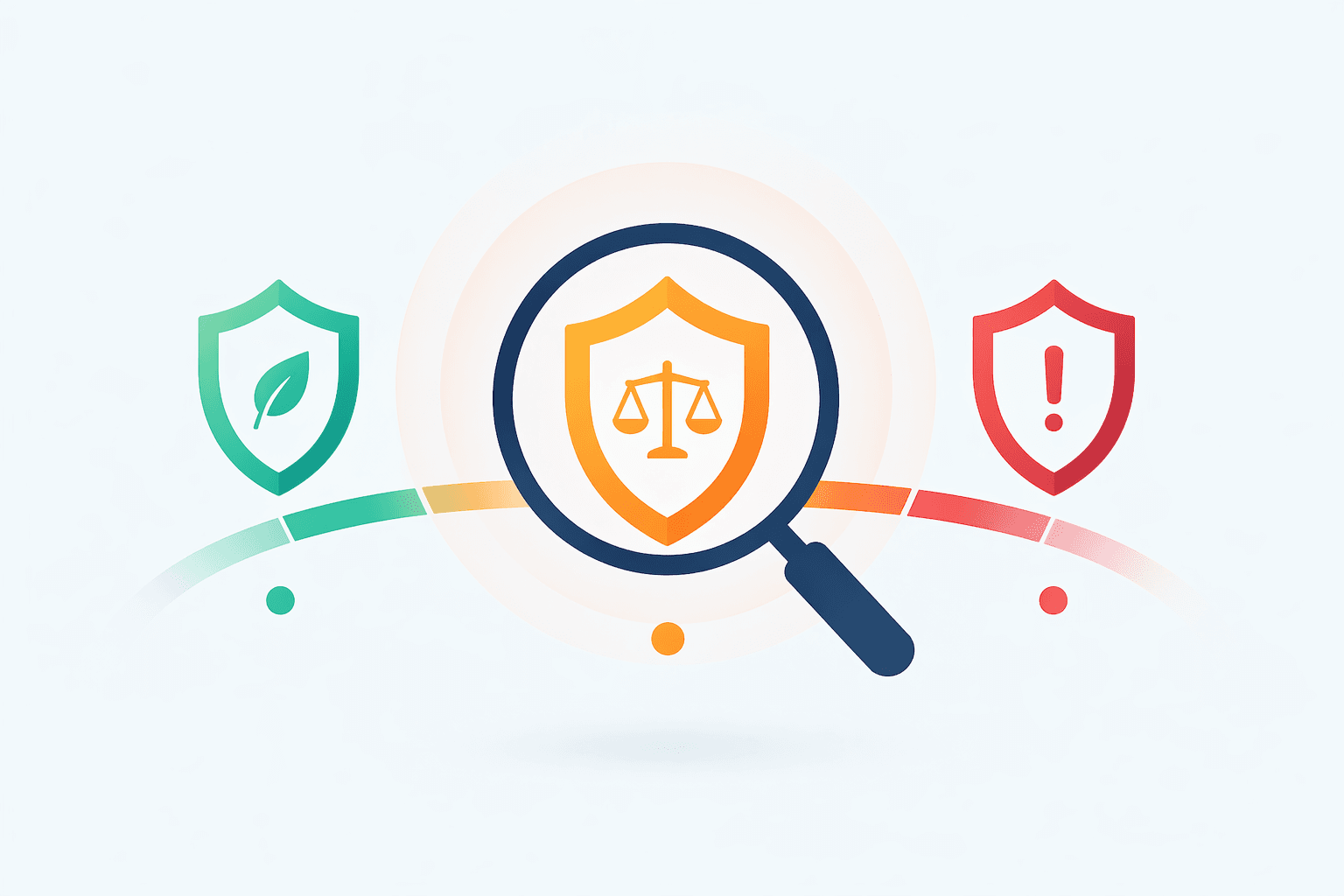
Why Everyone Focuses on High Risk—And Misses the Point
The spotlight is on the wrong examples
When people talk about the EU AI Act, the conversation usually revolves around a few well-known examples: credit scoring, recruiting systems, or biometric identification.
In other words, classic high-risk use cases.
This makes sense. These systems are clearly sensitive, directly impact individuals, and come with strict regulatory requirements. They are easy to explain and work well in presentations, articles, and public debates.
The problem: this creates a distorted view of where the real challenge for companies actually lies.
High Risk is visible—Limited Risk is not
High-risk systems come with clear rules, heavy requirements, and potential penalties. That makes them tangible.
Limited risk, on the other hand, feels less dramatic. Fewer obligations, less formal structure, less urgency.
And that’s exactly why it gets underestimated.
The core misconception
Many companies implicitly think:
“If we don’t have high-risk systems, the AI Act doesn’t really apply to us.”
This is one of the biggest strategic mistakes when approaching AI compliance.
The Reality in Companies: Most Systems Are Limited Risk
Not the exception, but the norm
If you look at how AI is actually used in companies today, a very different picture emerges.
Most systems in production are not high-risk.
Typical Limited Risk Use Cases
Customer support chatbots
AI-generated marketing content
Internal assistants and summarization tools
Recommendation engines
AI-powered product features
These systems are everywhere.
And that’s the key point:
Limited Risk is not a niche—it’s the majority.
What “Limited Risk” Really Means—and Why It’s Misunderstood
Not less relevant, just differently regulated
A common misconception is to equate “limited risk” with “not important” or “not regulated.”
That’s simply wrong.
Limited risk does not mean less responsibility—it means a different type of obligation.
At its core: transparency
While high-risk systems focus on documentation, risk management, and audits, limited risk is primarily about transparency toward users.
In practice, this means:
Users must be able to recognize when they interact with AI
AI-generated content must not be presented as human-made
No deception or “human pretending”
This sounds simple—but in practice, it often isn’t.
Why Limited Risk Is Especially Critical for Companies
The invisible layer of compliance
Limited risk is not difficult because the rules are complex. It’s difficult because it’s easy to ignore.
1. It’s “invisible compliance”
No big project. No dedicated audit. No clear red flags.
Which often means: nothing happens.
2. It affects almost every team
Unlike high risk, limited risk is not just a legal or compliance issue.
It directly impacts:
- Marketing (AI-generated content)
- Sales (automated outreach)
- Support (chatbots)
- Product (AI features)
This turns it into an organization-wide challenge.
3. It scales extremely fast
What starts as a small system can quickly reach massive scale.
A chatbot goes live and suddenly:
- it operates across multiple countries
- interacts with thousands of users
- becomes a core part of the customer journey
If transparency isn’t built in from the start, non-compliance scales with it.
The Real Strategic Problem
Many systems, little attention
In simple terms, the situation looks like this:
High Risk
Few systems
High attention
Limited Risk
Many systems
Low attention
And that leads to the core issue:
The largest compliance footprint sits in limited risk.
Why Limited Risk Is the Best Entry Point for AI Compliance
Don’t start with the hardest cases
Many companies try to approach AI compliance through high-risk scenarios. That often leads to paralysis or overengineering.
A more practical approach is simple:
Start where most of your systems are.
And that is almost always limited risk.
In practice, this means:
- Identify your AI systems
- Understand their use cases
- Check transparency requirements
- Define clear usage and disclosure rules
This creates structure—without starting with the most complex cases.
The Fastest Way to Get Limited Risk Under Control
From blind spot to structured overview
The biggest challenge with limited risk is not regulation—it’s lack of visibility.
Which systems are in use? Where do users interact with AI? Which content is AI-generated?
This is exactly where SimpleAct comes in.
Capture your AI systems, classify them, identify transparency obligations, and document everything in a structured way—without spreadsheets or scattered decisions.
This article is for general information purposes only and does not constitute legal advice. For specific cases, we recommend legal consultation. Status: April 2026.
About SimpleAct: SimpleAct is a German compliance platform that helps companies document their AI systems under the EU AI Act. From system inventory to risk classification and audit-ready exports—all in one place.
Tags
Ready to put EU AI Act compliance on autopilot?
SimpleAct helps you inventory AI systems, classify risk, and structure and keep the required documentation up to date.
Kamill Jarzebowski | SimpleAct
Author · SimpleAct Team